
Carvalhal (RH Florestal)
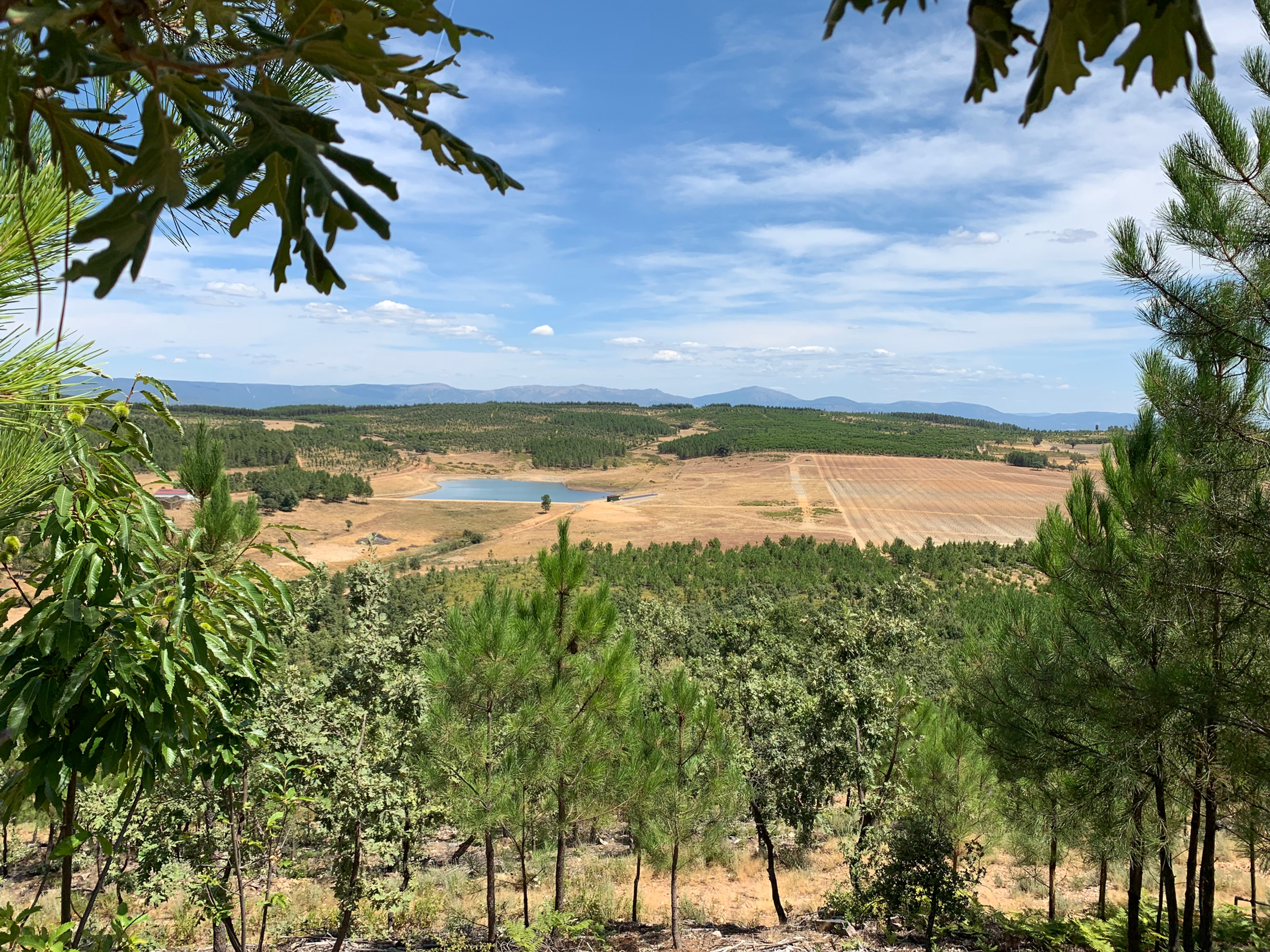


A 220-hectare forest property near Penha Garcia, Idanha-a-Nova, managed by RH Florestal since 2019. It has stands of cork oak, holm oak, pine and cedar, recent chestnut and pistachio plantations, a dam and a wide range of wildlife.
Carvalhal is a 220-hectare forest estate in Penha Garcia, Idanha-a-Nova, in the Castelo Branco district. It's the largest and most diverse property in the portfolio of RH Florestal, launched in 2015 as the forestry arm of RH Portugal. The estate was acquired in 2019. Since then, most of the trees have had formative pruning and thinning, to help them grow strong and healthy and to reduce the risk of wildfire.
Most of the land is cork oak, Pyrenean oak, stone pine, maritime pine and Bussaco cedar. Chestnut and pistachio trees have been planted recently. Along the watercourses and boundaries, native species such as narrow-leaved ash, black poplar and plane trees have also been planted to support ecological restoration and biodiversity.
The estate has its own dam of about 2.5 hectares, used for irrigation and for swimming and fishing. Camping is possible in the shade of mature trees near the dam. Deer, fallow deer, hares, foxes, mallards, terrapins and wild boar live on the property, and deer are often easy to spot on a morning walk.
Carvalhal is part of RH Florestal's wider approach to forest management. The company values timber, cork and nut production, and also the ecosystem services forests provide: carbon sequestration, biodiversity and soil conservation, and regulation of the water cycle. It manages several forest properties in the Castelo Branco, Portalegre, Santarém and Guarda districts, and is working towards a more multifunctional forestry model suited to future environmental and social needs.
Our Goal
To manage a large, biodiverse forest property in Idanha-a-Nova actively and responsibly: reducing fire risk, restoring native species along the water lines, and bringing economic, environmental and social benefits over the long term.


