The week in the Pulse · 9 – 15 November 2026

Can Portugal turn funding into practical protection?

Water shaped Portugal's week, from bottled deliveries after Storm Charles to funding for flood protection and firefighting points. A 173,000-square-kilometre marine reserve brought new protection, while plans to fell 3,593 cork oaks sharpened questions about what development costs. Elsewhere, returned containers passed 600 million and researchers found promise in walnut shells, biochar and lettuce.

7 daily editions · 254 stories · 7 regions

What shaped the week

Water security moved between immediate relief and long-term preparation this week. In Ameixieira, Storm Charles cut piped water, so local teams delivered bottled water while emergency work continued. Faro presented a €15 million urban flood plan, with 85% to be co-financed through Sustainable 2030. Northern municipalities can seek €10 million for firefighting water points in parishes hit by the major fires of 2024 and 2025. Conservation decisions carried harder questions about what protection permits and prevents. The new Rei Dom Carlos Marine Nature Reserve covers around 173,000 square kilometres and is meant to allow sustainable traditional fishing. On land, Quercus wants authorities to reject a Sines plan that would remove 3,593 cork oaks. It argues that the proposed compensation cannot match the loss. Small-scale experimentation offers another route, but it still needs proof. Near the Lagoaça substation, 12 Miranda donkeys will graze 30 hectares in rotation to reduce vegetation that feeds rural fires. The five-year project includes impact studies and biodiversity monitoring, which will test whether the approach works. Circular systems are moving at very different stages. Volta has recorded more than 600 million returned drink containers since April 2026, while Portugal's first integrated system for discarded furniture and mattresses is due to begin in January 2027. At the University of Évora, researchers matched pure coconut-fibre lettuce yields with a substrate containing walnut shells and biochar, while cutting leaf nitrates by about 61%. Further work is still needed on formulations, irrigation and other crops.

Stories behind the week

Preparing for water shocks

Water security spans emergency response and future preparation. Madeira households need deliveries after a storm, while Faro is planning for urban floods and northern municipalities can seek support for firefighting water points.

Faro's €15 million flood plan to receive 85% EU-backed funding

Faro City Council has presented an urban flooding mitigation plan budgeted at €15 million. The Minister for Environment and Energy has said that 85% of the cost will be co-financed through the Sustainable 2030 operational programme, leaving the municipality to cover the remaining share.
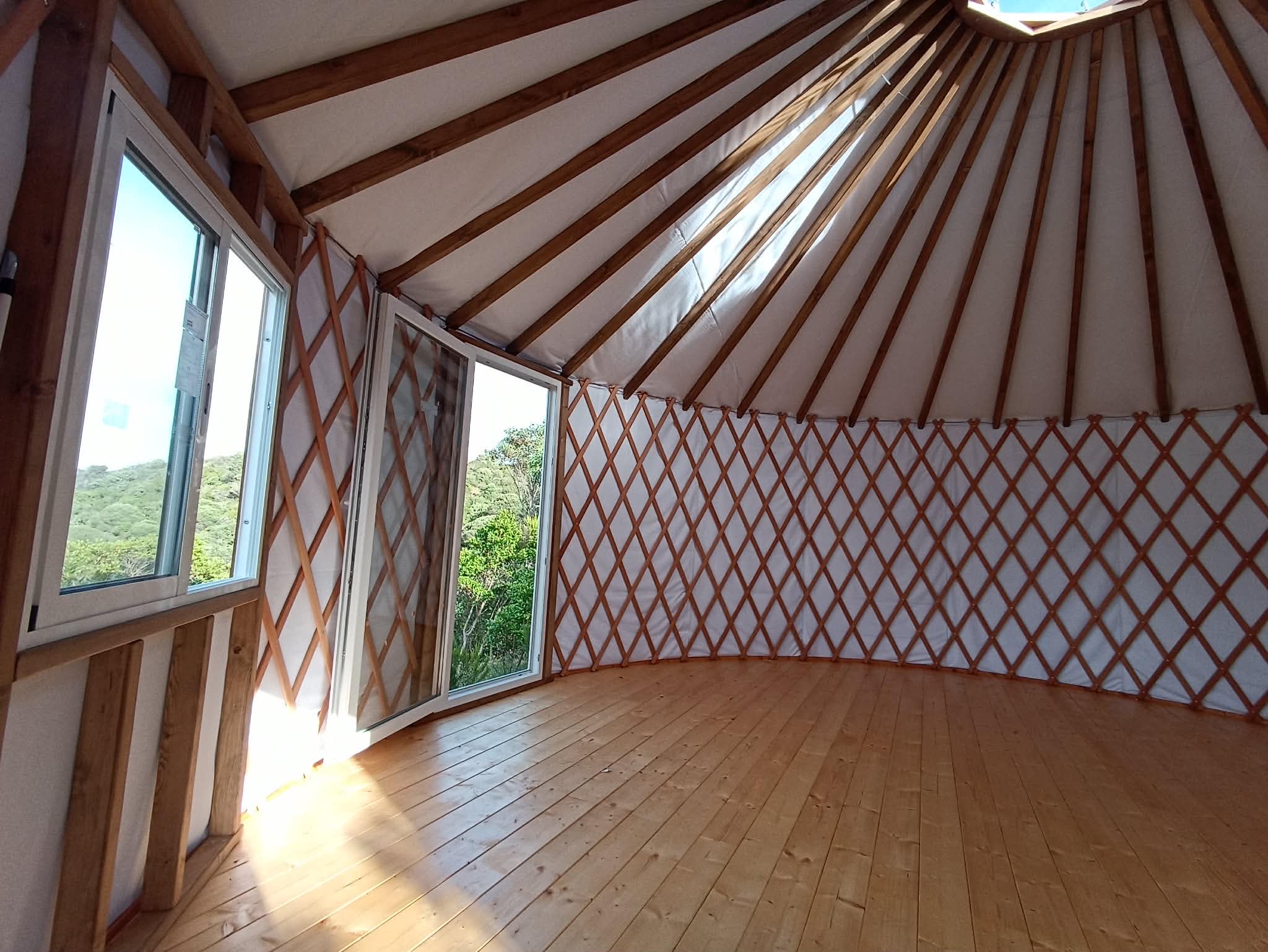
Ribeira Brava hands out bottled water to Ameixieira residents after storm cuts supply

Residents of Ameixieira, in the parish of Serra de Água, have been left without piped water after Storm Charles hit Madeira. Ribeira Brava council is supplying drinking water, backed by roughly 1,500 litres of bottled water provided by the Continente Modelo supermarket at Meia Légua. Council and parish teams are delivering it directly to affected households, and people can also collect it at Praceta da Serra de Água from 12:30 on Thursday, 12 November. The council is working with regional water company ARM to restore the public supply as quickly as possible, with emergency work continuing until normal service returns.

Northern Portugal opens €10 million fund for new firefighting water points

Municipalities in northern Portugal can now apply for €10 million to build new water points for fighting rural fires. The money comes from the NORTE 2030 programme, through the European Regional Development Fund and its RESTORE initiative, and targets parishes hit by the major fires of 2024 and 2025. Each water point can receive up to €150,000, covering at most 70% of eligible costs, as a non-repayable grant. Studies, access roads and pumping or safety equipment are included. Applications close on 29 January 2027, with a second round until 30 April 2027 if funds remain.

Protection under pressure

Portugal expanded marine protection, but conflict over 3,593 cork oaks in Sines shows how contested protection remains on land. A five-year donkey-grazing trial in the Douro adds a monitored, local test of wildfire prevention.

Portugal creates 173,000 km² marine reserve and classifies Gorringe Bank as protected zone

The Council of Ministers has formally created the Rei Dom Carlos Marine Nature Reserve, covering around 173,000 square kilometres and the Madeira-Tore complex, with its deep-sea coral gardens, sponges and threatened species. It is one of the EU's largest marine protected areas and is meant to let sustainable traditional fishing continue. The Gorringe Bank, about 22,900 km² south-west of Cape St Vincent, was also classified as a Special Area of Conservation. The government says the measures bring Portugal closer to protecting 30% of its maritime space by 2028. A third decree clears the way for a solar plant at the Santa Helena wind farm in Tarouca.

Quercus urges rejection of Sines industrial zone plan to fell 3,593 cork oaks

Environmental group Quercus has asked the Portuguese Environment Agency and the nature conservation institute to reject plans to clear 347.62 hectares of forest in the Sines Industrial and Logistics Zone, as public consultation closes. The project would remove 3,593 cork oaks to prepare land for new industrial and logistics units. Quercus says the environmental impact study estimates 32,403 tonnes of CO2-equivalent emissions against only about 1,176 tonnes of offset potential, and that planting 32.79 hectares as compensation cannot match what is lost. It also warns of damage to protected habitats, bird nesting sites, soil erosion and flood risk, and calls for a corrected non-technical summary and independent monitoring.

Miranda donkeys deployed to cut wildfire fuel around Douro substation

REN, the donkey conservation association AEPGA and the nature group Palombar have launched a five-year project near the Lagoaça substation in Freixo de Espada à Cinta, inside the Douro Internacional Natural Park. Twelve Miranda donkeys will graze about 30 hectares in rotation, reducing the vegetation that feeds rural fires and shielding the electrical infrastructure. Six traditional dovecotes will also be restored to protect rural heritage and threatened birds such as Bonelli's eagle. Impact studies and biodiversity monitoring will test whether this nature-based approach works, and the partners say it could become a pilot for other sites.

Waste becomes a resource

Circularity is moving from national systems to crop trials. Container returns have crossed 600 million, furniture and mattress responsibility starts in 2027, and an Évora lettuce trial found a possible use for walnut shells, though more research is needed.

Portugal's Volta deposit scheme passes 600 million returned drink containers

Portugal's Volta deposit-and-refund scheme has logged more than 600 million returned drink containers since it began operating in April 2026, operator SDR Portugal announced. A new online tool lets people check results by district, municipality and waste-management system, with monthly figures, the bottle-can split and the collection network. Lisbon leads with about 125 million containers returned to October, followed by Porto with around 101 million; Guarda and Bragança trail with roughly 4 million each. Eight of 50 planned Volta Kiosks are running, and the scheme targets a 90% collection rate by the end of 2029.

Mobilão licensed to run Portugal's furniture and mattress waste scheme from January 2027

The Mobilão association has been granted a licence to operate Portugal's first integrated system for end-of-life furniture and mattresses, starting on 1 January 2027 and running to the end of 2036. Under extended producer responsibility, manufacturers and importers will fund and organise collection and treatment, easing the burden on municipalities, which currently bear the costs of bulky waste. Collection targets rise from 25% in 2027 to 40% from 2030, while recycling targets climb from 50% to 90% over the same period. The licence also requires a national collection network and plans for prevention, awareness and research. The Azores and Madeira keep their own competences.

Walnut shell and biochar substrate matches coir yield for greenhouse lettuce, with far fewer nitrates

Researchers at the University of Évora tested crushed walnut shells, an agri-food by-product, as part of growing substrates for greenhouse lettuce. In trials at the Mitra experimental estate, a mix of 80% coconut fibre, 12% walnut shells and 8% biochar produced 7.1 kg of lettuce per square metre, comparable to pure coconut fibre. Nitrate levels in the leaves fell by about 61%, from roughly 4,130 to 1,600 mg/kg, and anthocyanin content rose. The team sees a circular-economy use for waste and a way to depend less on imported materials, but says further work is needed on formulations, irrigation and other crops.

The map keeps filling in. This week we added 4 projects and 103 events. Sustainable Living now connects 492 projects, 236 upcoming events and 1008 people across Portugal.

Projects to discover

On our agenda

Hear when something grows

New projects, openings and stories — a short letter, only when there's something worth sharing.

Which letters would you like?