The week in the Pulse · 31 August – 6 September 2026

Can Portugal make restoration commitments last?

Portugal made restoration commitments more concrete this week, from a legal right that follows land through sale or inheritance to a 375-measure national plan. Yet bathing water restrictions rose sharply, and unexplained crystals appeared at Roxo reservoir. Investment in water networks and energy storage offers practical responses, while local opposition in Gavião shows why location still matters.

7 daily editions · 126 stories · 7 regions

What shaped the week

Portugal's sustainability choices this week were often about making commitments durable. A first-of-its-kind registered land-surface right now binds a private property to ecological restoration even if it is sold or inherited. At national level, a 375-measure draft restoration plan has reached Brussels, but review and finalisation could run until August 2027. The pressure behind such work is already visible. Bathing water restrictions rose 65% and bans more than doubled compared with 2025. By 30 August, 68 sites had been unfit for bathing at least once, with inland waters disproportionately affected. At Roxo reservoir, unusual crystals remain untested, despite a study finding water conductivity in its sub-basin 225% above natural levels. The observation is concerning, but its cause has not been established. In Alto Alentejo, the response is focused on basic infrastructure. Águas do Alto Alentejo has submitted about €9.4 million in funding bids to renew water and sanitation networks across ten municipalities. It says earlier measures cut unbilled water by roughly 18% and saved about 414,000 cubic metres. Energy planning brings its own trade-offs. The national storage strategy proposes 6.9 GW by 2030, using batteries and pumped hydro to support renewable electricity. In Águeda, 15 firms are due to share 9.31 MWp of solar generation and 9 MWh of storage. Yet Gavião council opposes a 220 kV line linked to the Pego plant's conversion, citing impacts on nearby villages. Expanding clean energy still depends on where infrastructure goes and whether communities accept its costs.

Stories behind the week

Making restoration stick

Portugal is putting restoration into law, policy and place. A registered land right can survive a sale or inheritance, the national plan sets out 375 measures, and Mafra has begun a €1.1 million ecological park beside protected coastal habitat.

Portugal uses land-surface right to permanently protect land for rewilding

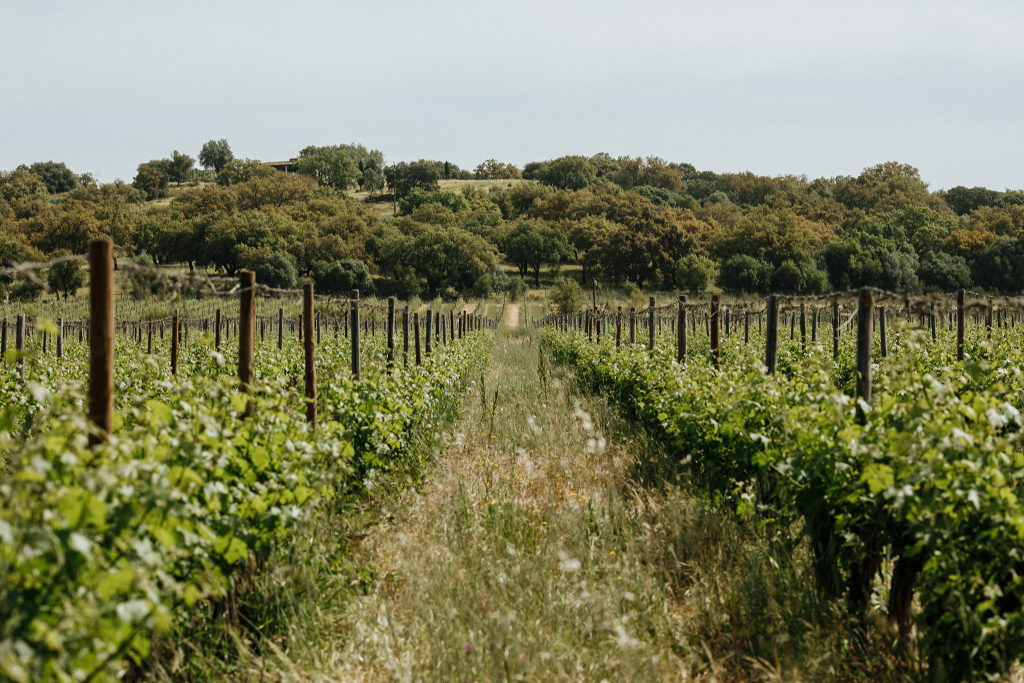
Rewilding Portugal, The Lifescape Project and law firm PLMJ have signed and registered Portugal's first agreement using the legal instrument known as "direito de superfície" to permanently commit a private property to ecological restoration. This tool lets land stay under its owner's title while another party holds a durable real right over it for a specific purpose, traditionally construction or farming/forestry, now adapted for conservation. Because the agreement is formally registered, the restoration commitment binds the land itself, even through future sale or inheritance. The initiative ties into Lifescape Project's Rewilding Law Hub, which develops legal mechanisms to secure land for rewilding across different countries.
Portugal submits draft nature restoration plan to Brussels

Portugal has submitted its draft National Nature Restoration Plan to the European Commission, ahead of the 31 August deadline set by the EU Nature Restoration Regulation. The 375-measure document, coordinated by the Institute for Nature Conservation and Forests, covers terrestrial, marine, freshwater, urban, agricultural and forest ecosystems. It followed a public consultation that drew 184 contributions. Portugal is the third member state to submit such a plan. The Commission now has six months to review it, after which Portugal has a further six months to finalise and publish the definitive version, expected between September 2026 and August 2027.

Mafra council begins building Empa ecological park near Ericeira

Mafra council has started construction of the Empa Ecological Park, north of Ericeira, budgeted at 1.1 million euros. Work began after archaeological surveys were completed, with the contract awarded on 27 August. The project aims to ecologically restore natural heritage and enhance the landscape around Forte Milreu, between Empa and Orelheira beaches, linking land and sea, urban and rural areas. The site falls within the Alcobaça-Cabo Espichel coastal protection programme and the Natura 2000 network due to cliffs with endemic vegetation. Funded by Portugal 2030 EU funds, the works are expected to take seven months.

Water under pressure

Water quality is exposing weaknesses from beaches to reservoirs. Restrictions rose sharply, Roxo's unusual crystals still need testing, and Alto Alentejo is seeking €9.4 million to modernise networks after earlier efficiency measures reported measurable savings.

ZERO reports sharp rise in Portugal's bathing water restrictions

Environmental association ZERO says the quality of mainland Portugal's bathing waters worsened in 2026, with bathing restrictions up 65% and outright bans more than doubling compared with 2025, based on monthly APA and DGS data for May to July. Interdictions linked to microbiological contamination rose 143%, concentrated mainly in July. Looking at the wider season to 30 August, ZERO found 68 bathing sites with unfit water at least once, with inland waters disproportionately affected. It blames sanitation failings, farm and industrial discharges, and diffuse pollution, and calls for stronger inspection and accountability.

Salt-like crystal deposits found on banks of Roxo reservoir

A bird observer in Aljustrel reported finding unusual crystal deposits, resembling salt, along the banks of the Roxo reservoir, some forming clumps up to three metres long and 30cm high. She has not linked the find to any cause and is asking for the material to be tested. The report follows a European Commission Joint Research Centre study, published in Nature Communications, which found the Roxo sub-basin's water conductivity had risen 225% above natural levels, a case of severe salinisation, alongside rises of 88% in the Sado basin and 116% in Alcanena.

Águas do Alto Alentejo submits €9.4m in EU funding bids since January

The intermunicipal utility Águas do Alto Alentejo (AAA) has filed applications worth around €9.4 million to Portugal 2030 funds since January, aimed at renewing and modernising water supply and sanitation networks across ten municipalities in the Portalegre district. The bids build on over €11 million invested since 2022. Separately, a water efficiency project launched in late 2024, worth about €6 million over eight years, is under way, including new metering, leak detection and telemanagement systems. AAA says past measures cut unbilled water by roughly 18% and saved about 414,000 cubic metres.

The footprint of power

Portugal wants 6.9 GW of energy storage by 2030, while Águeda is building shared solar and batteries for 15 firms. Gavião's rejection of a proposed power line shows that renewable infrastructure can still face strong local objections over its footprint.

Portugal plans to nearly double energy storage capacity by 2030

Portugal's National Energy Storage Strategy (ENAE) is open for public consultation for 20 days starting 28 August. The plan, based on studies by INESC TEC, INESC-ID and IN+, sets targets of 6.9 GW of storage capacity by 2030 and 9.76 GW by 2040. It combines fast-deployment solutions like batteries with larger, longer-lasting projects such as pumped hydro storage. The strategy aims to maximise use of renewable electricity, offset the variability of wind and solar output, strengthen supply security and reduce reliance on imported fossil fuels, and also sets out market principles to reward storage's contribution to grid flexibility and stability.

Águeda invests €6.6 million in shared energy community for firms

Águeda's municipal council has awarded a €6.6 million contract to a consortium led by Dstsolar to build a collective self-consumption energy community at the Casarão Business Park. The project, funded under the PRR programme for new-generation business areas, will let 15 companies produce, store, share and consume locally generated renewable energy. Plans include 15 production and storage units, totalling 9.31 MWp of solar capacity and 9 MWh of storage, with battery systems developed by b-again, another Dst group company. The scheme aims to cut grid dependence, lower energy costs and reduce carbon emissions among businesses at the park.

Gavião council opposes Endesa solar and wind power line project

The municipal council of Gavião, in Portalegre district, issued an unfavourable opinion on an Endesa project for a 220 kV power line linking Atalaia-Torre das Vargens and Cruzeiro-Concavada, part of infrastructure tied to the Pego thermal plant's conversion to renewables. Mayor António Severino said the council already has 400 hectares classified as solar park area, 80 of them covered by panels, and argued further projects would harm the territory and worsen depopulation. He said the plan involves a substation near a village and would route lines from Crato, Ponte de Sor and Gavião through it, with heavy impacts on nearby villages.

The map keeps filling in. This week we added 24 projects and 96 events. Sustainable Living now connects 391 projects, 247 upcoming events and 800 people across Portugal.

New projects this week

On our agenda

Sept1018:30
Participatory sessions on management plans for Loulé's protected areas

Participatory sessions on management plans for Loulé's protected areas

Public meetingFree

10 – 13 Sept

Vários locais (Junta de Freguesia de São Sebastião, Centro Autárquico de Quarteira, Junta de Freguesia de Salir, Casa do Povo de Querença) · Loulé · Algarve

Loulé is holding participatory sessions between 10 and 13 September to discuss management plans for four local protected areas: Rocha da Pena, Fonte Benémola, Foz do Almargem e Trafal, and Gruta de Vale Telheiro. The sessions, open to public entities, associations and the general public, will take place at various locations across the municipality.

Seven days in the Pulse

Hear when something grows

New projects, openings and stories — a short letter, only when there's something worth sharing.

Which letters would you like?