The week in the Pulse · 14 – 20 September 2026

Who benefits when Portugal reshapes land and streets?

Fire risk, solar development and safer transport all raised the same question this week: who gets a say in how Portugal changes? Communities challenged land use and local costs, while responses and proposals ranged from native planting and shared farmland to electric buses. The details differ, but participation and local benefit sit at the heart of each debate.

7 daily editions · 153 stories · 7 regions

What shaped the week

Lower fire activity this year has not settled the argument over prevention. By the end of August, 6,910 rural fires had burned 67,130 hectares. In Águeda, dozens protested against abandoned eucalyptus and pine plantations while highlighting native replanting. In Fundão, Associação Projeto Milagre is crowdfunding the purchase of 11 burned hectares for a permanent regeneration site. Seven Minho municipalities, meanwhile, received machinery for fuel management. Solar expansion is exposing a similar question about how land is used and who benefits. BP Lightsource reduced its proposed Sophia plant after environmental assessments and local protests, and abandoned the related Beira project. In Baixo Alentejo, 2,742 hectares across eight municipalities have been designated renewable acceleration zones. Ourique’s mayor supports solar development but wants compensation, fairer property taxation and stronger protection for farmland, landscape and biodiversity. Agrivoltaics offers one possible compromise, provided farming remains the land’s primary use. Transport policy shows change at two different scales. STCP put 30 new electric buses into service around Porto, taking its electric fleet to 126 and about 28% of operations. Ponta Delgada wants to make its Minibus free for all residents, but its proposed 2027 to 2037 concession, worth over €20 million, still needs Municipal Assembly approval. Nationally, MUBi has proposed a general 30km/h urban limit and clearer protections for walking and cycling. Together, these stories show that cleaner infrastructure is only part of the task. Rules, public scrutiny and access determine how change is experienced locally.

Stories behind the week

Rethinking fire prevention

Wildfire prevention is moving through protest, land stewardship and public investment. Águeda campaigners want risky abandoned plantations replaced, a Fundão group hopes to secure burned land for restoration, and Minho municipalities have received machinery to manage fuel.

Dozens protest in Águeda against eucalyptus wildfire risk

Dozens of people gathered in Águeda, Aveiro district, to protest against wildfires and demand the removal of abandoned eucalyptus and pine plantations, which activists describe as a nationwide fire risk. Organised by Quercus with the Floresta do Futuro movement and a local association, the event highlighted community efforts to replant native species. Spokesperson João Camargo argued native forests burn slower and are easier to control, and warned that this year's lower fire activity was down to chance rather than reduced risk. Official data show 6,910 rural fires and 67,130 hectares burned in Portugal by end of August 2026.

Crowdfunding campaign seeks to buy fire-scorched land in Fundão

The Associação Projeto Milagre has launched a crowdfunding campaign to buy 11 hectares in Fundão destroyed by the 2025 wildfires, aiming to remove the land permanently from the property market. The plan is to transfer it to a foundation so it can never be resold, turning it instead into a demonstration site for ecosystem regeneration, agroforestry, ponds and ecological corridors. So far 56 people have funded roughly 4.6 of the 15.5 football pitches the land represents. The campaign runs until 12 October, with the wider goal of building a network of regenerative projects addressing wildfires, droughts and floods.

Seven Minho municipalities receive tractors for fire prevention

Seven municipalities in the Minho region received new tractors and agricultural equipment to strengthen fuel management and rural fire prevention. The handover took place in Amares, in a ceremony led by Agriculture and Sea Minister José Manuel Fernandes and Secretary of State for Forests Rui Ladeira. The equipment is part of the Mechanisation Programme for Fuel Management, funded by the Recovery and Resilience Plan (PRR), which allocates 80 million euros overall to the initiative.

Sharing solar’s returns

Solar power’s footprint is under closer local scrutiny. A developer has reduced one project, an Alentejo mayor wants host communities to share the returns, and agrivoltaics is being presented as a way to keep farming central.

BP Lightsource scales back Sophia solar plant after local opposition

BP Lightsource has redesigned its Sophia solar power plant project, cutting the area and capacity of the installation, after facing negative environmental assessments and protests from local residents. The company says it listened closely to concerns raised by nearby communities and adjusted the plans accordingly. As part of the revision, the developer has abandoned a related project, the Beira solar plant. The move reflects growing friction in Portugal between renewable energy expansion and local acceptance, with developers increasingly forced to scale down proposals to secure environmental approval and public support.

Ourique mayor demands local returns from Alentejo solar boom

Portugal's new PSZAER programme has designated 2,742 hectares across eight Baixo Alentejo municipalities as renewable acceleration zones, speeding up licensing for solar projects. Almodôvar has the largest share, followed by Ourique and Beja. Ourique mayor Marcelo Guerreiro backs harnessing the region's solar potential but warns that hosting panels and transmission lines must not leave the region with only the impacts while wealth flows elsewhere. He calls for territorial compensation mechanisms, fairer property taxation, integrated grid planning and greater use of underground high-voltage lines, alongside protection of farmland, landscape and biodiversity.

Agrivoltaics pitched as way to combine farming and solar power

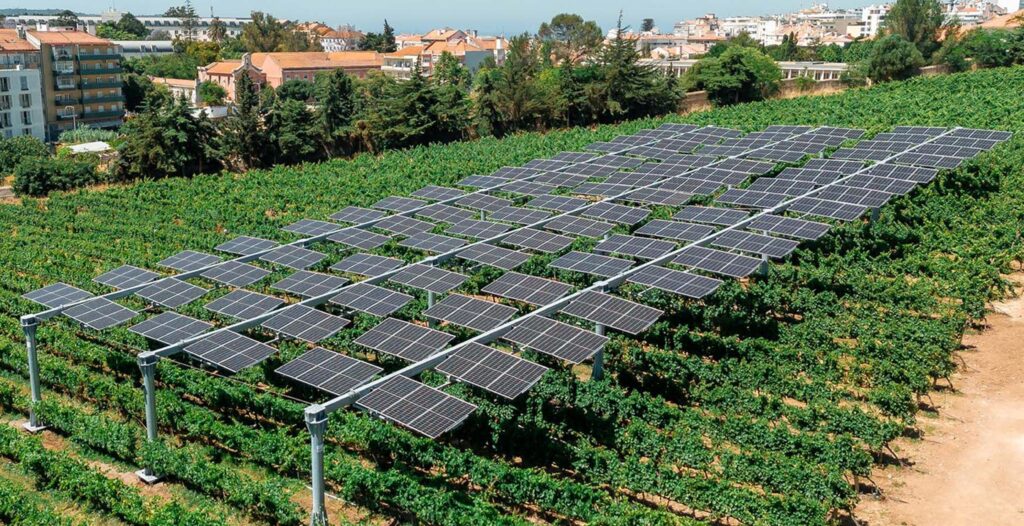
As pressure grows on land use, water availability and the energy transition, agrivoltaics is emerging as a solution that combines farming and renewable energy production on the same plot of land. The approach allows solar panels and crops or livestock to share space, aiming to make more efficient use of scarce land. A key principle discussed is that agriculture should remain the primary use of the land, with energy production as a complementary activity rather than a replacement.

Changing everyday transport

Public transport is gaining electric vehicles and could become free for Ponta Delgada residents. At the same time, MUBi is asking national rule-makers to make urban streets slower and clearer for people walking and cycling.

STCP adds 30 electric buses, fleet reaches 126

STCP began operating 30 new fully electric buses on Thursday, part of a roughly €12 million investment, with about €7 million financed by the Recovery and Resilience Plan and €5 million by shareholder municipalities. The addition brings the company's electric fleet to 126 vehicles, meaning around 28% of its operation is now emissions-free. Built by Caetano Bus with a range of about 320 kilometres, the new buses will be based at the Via Norte depot and replace older vehicles reaching the end of their working life, serving Porto, Vila Nova de Gaia, Matosinhos, Maia, Valongo and Gondomar.

Cycling group proposes 30km/h urban speed limit for Portugal

MUBi, a Portuguese cycling and mobility association, has submitted proposals to the Ministry of Internal Administration for the ongoing revision of the Highway Code and traffic signage rules. Key measures include setting 30km/h as the general urban speed limit, keeping 20km/h in shared spaces, creating a separate legal category for personal mobility vehicles, and clearer cycling rules such as riding two abreast and contraflow cycling on one-way streets. The group also wants stronger pedestrian crossing protections and an end to signage allowing pavement parking. MUBi argues the reform should not focus only on raising fines and calls for civil society involvement in the process.

Ponta Delgada plans free Minibus service for all residents

The Ponta Delgada municipal council wants to make its Minibus public transport service free for all residents during the current term, mayor Pedro Nascimento Cabral announced. Between August 2024 and August 2026, the network recorded over 1.8 million trips, nearly a third made using existing free passes for students and people aged 65 or over. Separately, the council approved a proposal, amid opposition from the PDLPT and Chega, to prepare a new international tender for the urban passenger transport concession, involving a multi-year commitment of over €20 million between 2027 and 2037, which still needs Municipal Assembly authorisation.

The map keeps filling in. This week we added 12 projects and 101 events. Sustainable Living now connects 426 projects, 254 upcoming events and 861 people across Portugal.

New projects this week

On our agenda

Hear when something grows

New projects, openings and stories — a short letter, only when there's something worth sharing.

Which letters would you like?